77% off on product page · save $79.97
How to Measure for a Pleated Skirt: A Fit Guide
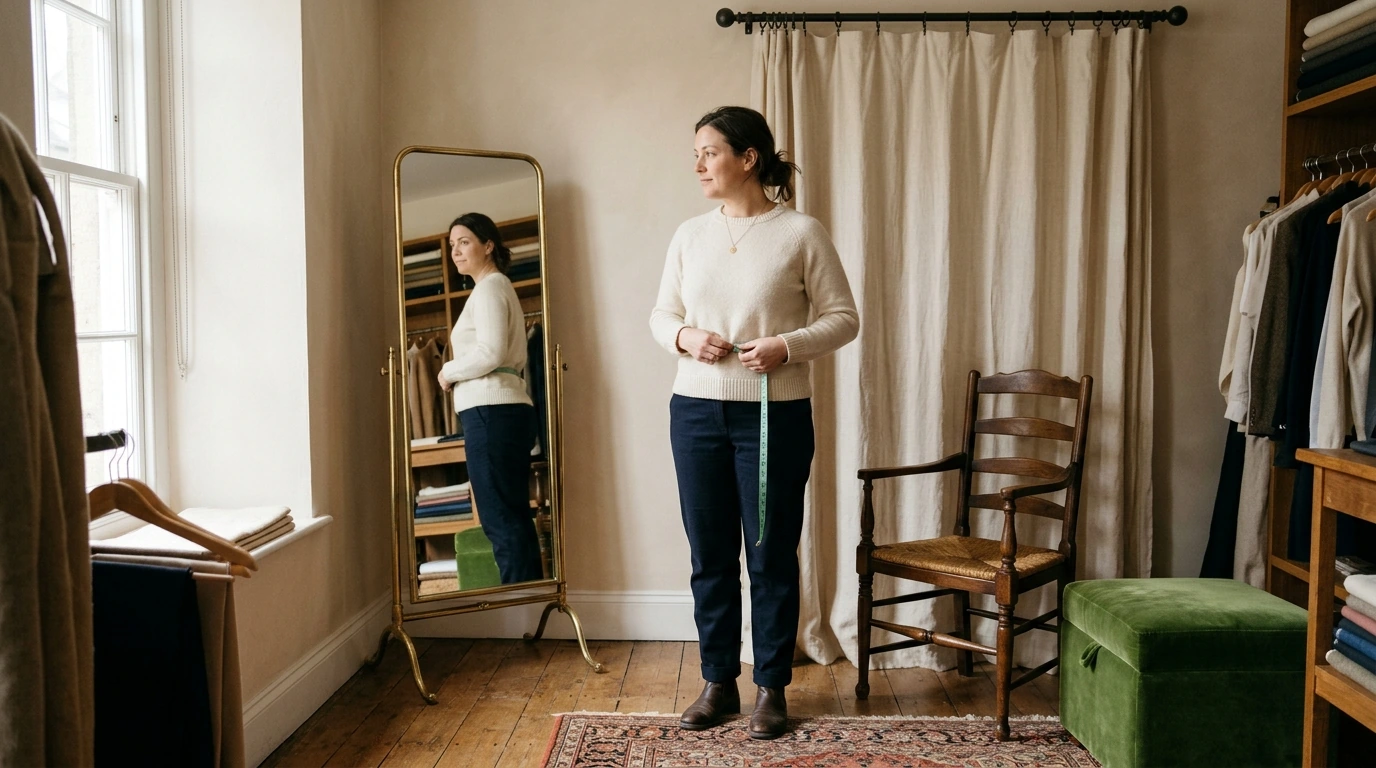
Stand comfortably in the underwear or base layer you expect to wear, and wrap a flexible measuring tape around your natural waist, usually the narrowest part of your torso above your belly button. Keep the tape level and snug without pulling it tight, breathe normally, and record the measurement in inches.
If you prefer your skirt to sit lower, measure around that position as well, since a waistband worn below your natural waist may need a different measurement. Compare your number with the garment’s waist measurement or size chart, keeping in mind that your body measurement and the finished waistband measurement are not necessarily the same.
With your feet together, wrap the tape around the fullest part of your hips and seat, keeping it parallel to the floor all the way around. Use a mirror or ask someone to help you check the tape’s position, then record the measurement without compressing your body.
Hip room matters even on a pleated skirt because pleats can open when the fabric is pulled across the hips, changing how the skirt hangs. If your waist and hip measurements correspond to different sizes, consider how the waistband fastens and how much room you need to sit and move comfortably.
Featured in this guide
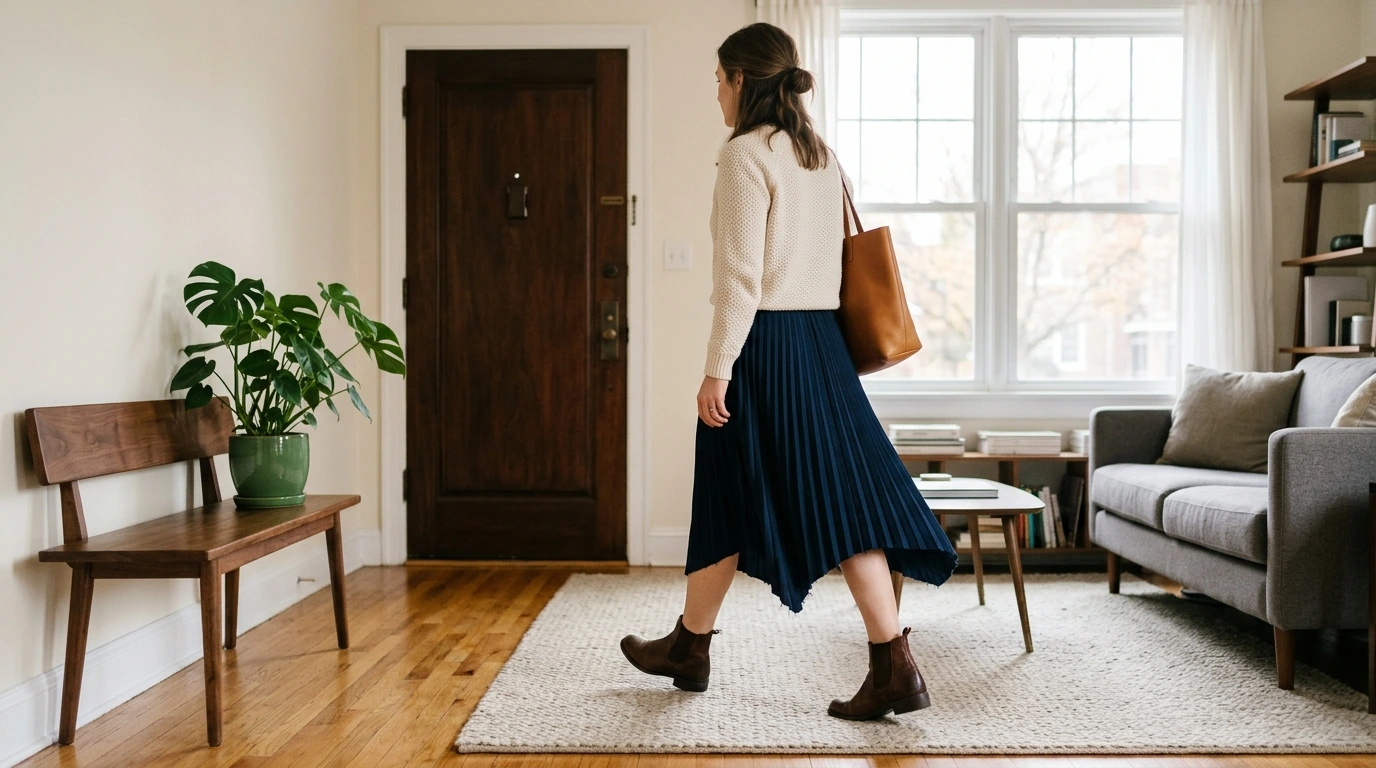
Asymmetrical Pleated Knee-Length Skirt
Measure from the point where you plan to wear the waistband down to your preferred hem, standing straight rather than bending to read the tape. For a knee-length look, measure to the part of your knee where you want the skirt to end, and consider the shoes you are likely to wear with it.
An asymmetrical hem can have more than one length, so measure to both your preferred shortest and longest points if those dimensions are available. Our Asymmetrical Pleated Knee-Length Skirt outfit guide offers styling ideas once you have a length in mind.
When trying on a pleated skirt, sit, stand, and take a few steps to see whether the waistband feels comfortable and the pleats hang as you expect. A snug waist can feel tighter when seated, while a skirt that pulls across the hips may cause the pleats to spread.
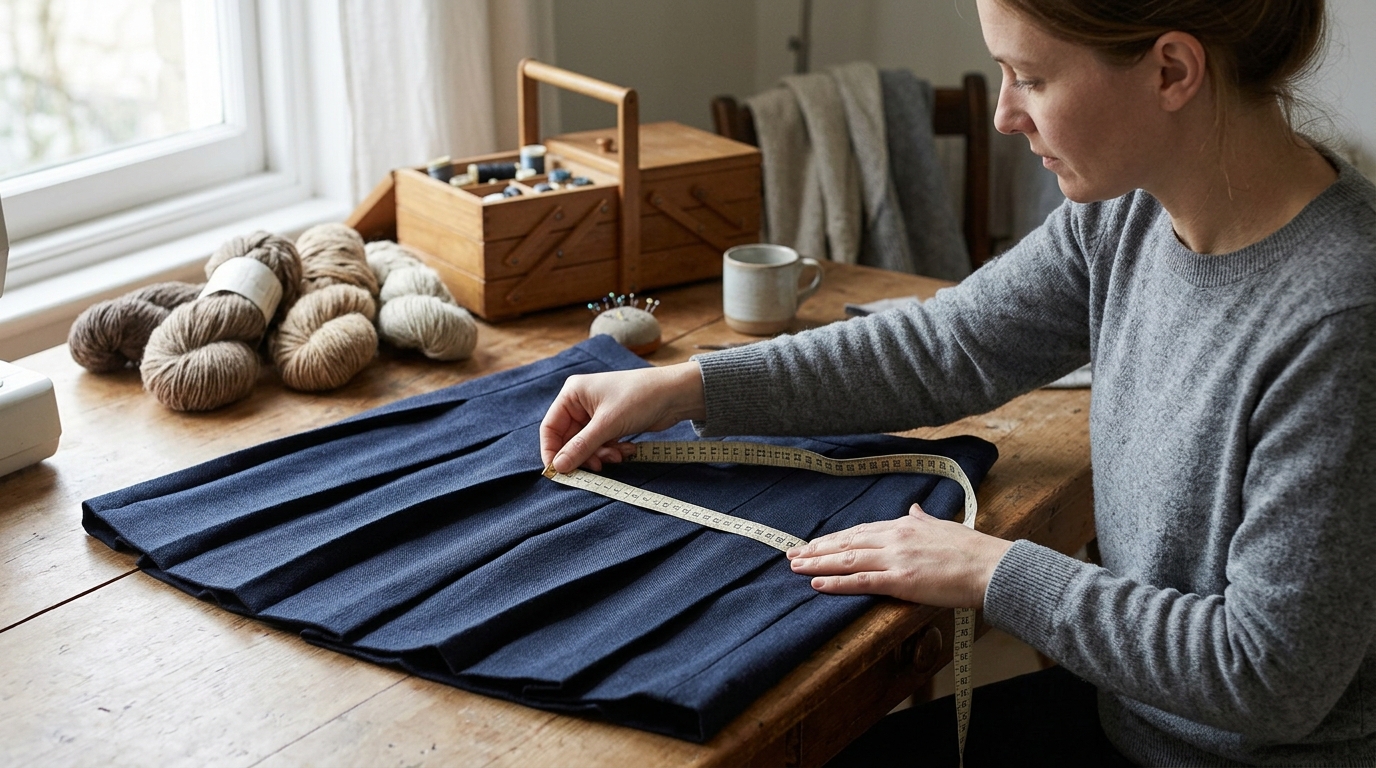
If you are measuring a skirt you already own, lay it flat, fasten the waistband, and measure straight across it, then double that number for an approximate waist circumference. Measure the length from the waistband to the hem, noting separately any shorter or longer sections.
For sizing, measure your waist, hips, and desired length, then compare those numbers with the available garment measurements. For a sewing project, the fabric needed for pleats depends on their depth, number, and spacing, so calculate it from your chosen pattern rather than relying on one universal multiplier.


Leave a comment