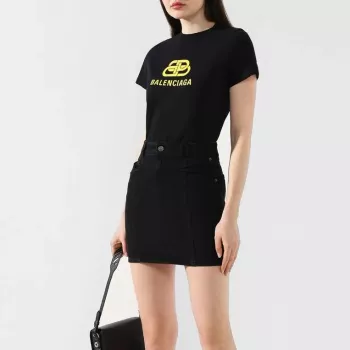
Spotting a fake Balenciaga T-shirt comes down to a few high-signal details: the quality of the fabric, the precision of the branding, and the accuracy of the tags and construction. Counterfeits often look close in photos but fall apart when you inspect print edges, stitching consistency, and label typography.
Authentic Balenciaga tees commonly use substantial, structured cotton with a clean drape. Many fakes feel thin, overly stretchy, or oddly stiff. Check for pilling, uneven texture, or a “plastic” hand-feel that suggests low-grade blends.
Look for sharp edges, even ink coverage, and correct placement. On counterfeit shirts, logos may sit slightly off-center, letters can be too thick/thin, and fine details (like spacing and kerning) often look “crowded.” If the print feels rubbery, cracks easily, or looks glossy when it shouldn’t, that’s a red flag.
Turn the shirt inside out and examine seam lines. Authentic pieces typically show tidy stitching, consistent thread tension, and clean finishing at the collar and hems. Sloppy overlocking, loose threads, wavy seams, or a collar that twists easily can indicate a replica.
Tags are one of the most common failure points on fakes. Compare the font weight, letter spacing, and alignment, and check that the tag material feels premium and lies flat. Wash tags with blurry printing, inconsistent language, or crooked sewing are frequent counterfeit tells.
For a more detailed set of comparison points (including tag layouts and common replica mistakes), use this guide: How to tell a fake Balenciaga T-shirt.
Listings with vague photos, missing close-ups of tags, unusually low prices, and sellers who refuse proof of purchase are major warning signs. Also watch for inconsistent sizing info or photos that hide seams and label details.





Leave a comment