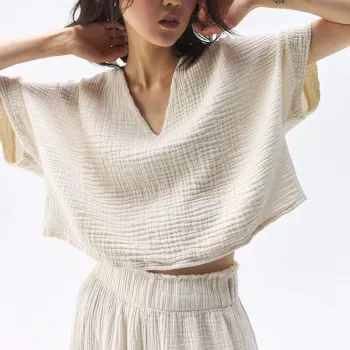
Muslin is a type of cotton fabric, while “cotton” is the fiber (and a broad category of fabrics made from that fiber). In other words, muslin is usually made from cotton, but not all cotton fabrics are muslin. The difference comes down to how the fabric is woven, finished, and intended to be used.
Muslin is typically a lightweight to medium-weight, plain-weave fabric known for its breathable feel and slightly textured, natural look. It’s often minimally processed and can range from loosely woven (more airy) to more tightly woven (more durable). Because it’s simple and versatile, muslin shows up in everything from baby swaddles and kitchen cloths to crafting, quilting, and clothing linings.
Cotton fabric refers to any fabric made primarily from cotton fibers. That includes many weaves and finishes—like percale, sateen, flannel, denim, twill, jersey knit, and canvas. Each cotton fabric can feel and perform very differently depending on yarn thickness, weave structure, and finishing treatments.
Breathability: Muslin is usually very breathable due to its plain weave and lighter construction. Many other cotton fabrics can be just as breathable, but heavier weaves (like denim or canvas) will feel warmer and less airy.
Softness: Muslin can start slightly crisp or textured and soften with washing. Cotton sateen or brushed cotton flannel often feels softer right away due to finishing.
Durability: A tightly woven muslin can be durable, but some muslins are intentionally loose and may snag or wear faster. Heavier cotton weaves generally hold up best for high-abrasion uses.
Choose muslin when you want a light, breathable, quick-drying fabric with a natural, relaxed hand. Choose a different cotton fabric when you need a specific feature—extra warmth (flannel), a smooth sheen (sateen), stretch (cotton jersey), or rugged strength (canvas or denim). For a deeper breakdown, visit https://admirela.com/what-is-muslin-fabric-vs-cotton/.
Yes. Muslin is typically lightweight and breathable, which helps heat and moisture dissipate quickly, making it a popular choice for warm climates and summer layers.



Leave a comment